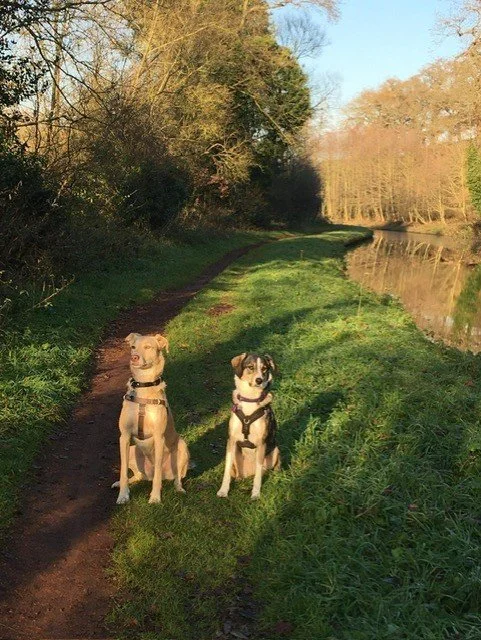
Why slowing down might be the best thing you can do for yourself and your dog.
"Slow down, you move too fast…"
Anyone now humming Simon and Garfunkel?
Welcome to you! Everyone else, go and have a listen. You can thank me later. 🎶
Anyway, I digress.
I had a week off at the beginning of October and, rather than filling it with days out, trips away and endless plans, I decided to stay at home.
I know. Wild!
But I needed to slow down.
Life gets busy, work gets busy, and somewhere along the way the clutter and chaos at home starts to build up. And when I'm tired and busy, I find it can all become a little overwhelming.
So I decided to tackle it.
One room a day. Headphones on, audiobook playing, and I pottered.
I sorted cupboards, filled bags for the charity shop, made piles of books and got rid of things I no longer needed.
Nothing particularly exciting, but actually, it was rather lovely.
And in the afternoons, I walked the dogs.
The Joy of Going Nowhere in Particular
No getting in the car. No planning a route or driving somewhere for a big adventure.
Just walking from home.
I'm incredibly fortunate that I can wander across parks and fields, along canal towpaths and over river bridges, all without having to get in the car.
And at this time of year, it's beautiful.
The seasons were shifting from summer into autumn. The leaves were turning gold, the sun was sitting a little lower in the sky and everything had that lovely autumn feeling.
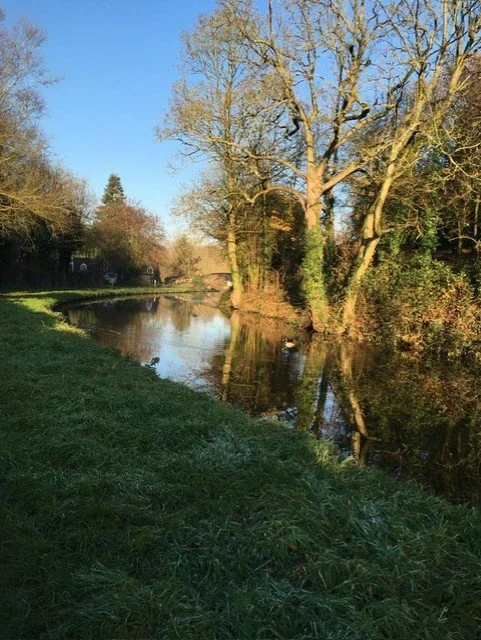
So we wandered.
The dogs and I.
They sniffed, investigated the local pee-mail and generally took their time checking out what had been happening in their little world.
And I did much the same. Well, without the pee-mail obviously!
I watched a young heron, the ducks and geese on the water and listened to the birds along the river. There are warblers tucked away in the trees and a kingfisher along one particular stretch, so I'm always keeping an eye out for that wonderful flash of blue.
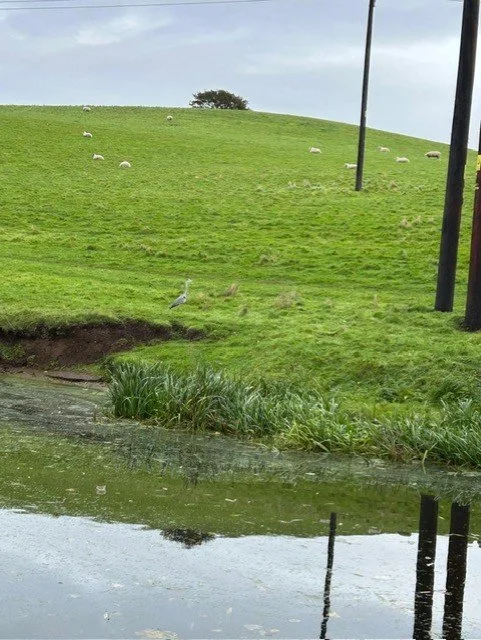
These are the walks I love best.
No headphones. No checking my phone. No rushing to get somewhere.
Just me and my dogs, enjoying where we live and spending time together.
And it got me thinking.
Everything Has to Happen Now
We live in such a fast-paced world.
Everything is instant. We want answers immediately, deliveries tomorrow and problems solved yesterday.
And increasingly, I see that expectation creeping into dog training.
We want quick fixes.
The dog pulls on the lead? Fix it.
Barks at visitors? Stop it.
Reacts to other dogs? Make it go away.
And preferably by next Tuesday!
I get it. I really do.
Nobody enjoys being dragged down the road by an enthusiastic dog. Nobody wants to listen to incessant barking, and walking a dog who lunges and shouts at every dog they see can be exhausting, frustrating and sometimes really upsetting.
But here's the thing.
Behaviour doesn't happen in isolation, and it rarely changes overnight.
Often, by the time someone contacts me, the behaviour has been happening for months, sometimes years.
The dog has always pulled on the lead. They've been barking at visitors since they were young. They've struggled around other dogs for a long time.
And now they're three years old, and we're hoping to fix it in an hour.
Unfortunately, no matter what the internet might tell you, that's not how learning works.
Habits Are Hard to Break
Take loose lead walking.
On the surface, it sounds simple enough. We want the dog to walk beside us without pulling.
But think about what's actually happening.
Your dog has probably spent months, possibly years, learning that pulling gets them where they want to go.
They pull towards an interesting smell. They get to sniff it.
They pull towards the park. They get to the park.
Pulling works!
And meanwhile, we've developed our own habits. We tighten the lead, pull back, keep walking, perhaps get frustrated and repeat the same thing tomorrow.
Both ends of the lead have learned a pattern.
And as anyone who has ever tried to break a habit knows, changing those patterns takes time.
We need to teach the dog what we'd like them to do instead, help them understand why it's worth doing and then practise until that new behaviour becomes familiar.
Not just once.
Not just in the kitchen.
But gradually, in different environments, with different distractions and in real life.
Training isn't about doing something once and expecting it to stick. It's about building understanding through repetition, consistency and patience.
Before We Change the Behaviour, We Need to Understand It
The same applies to barking, lunging and reactivity.
Before we start trying to stop a behaviour, we need to ask a really important question.
Why?
Why is the dog pulling?
Why are they barking at visitors?
Why do they lunge when another dog approaches?
Are they frightened? Frustrated? Overexcited? In pain? Have they learned that a particular behaviour gets them something they want, or helps them avoid something they don't?
Because the reason matters.
A dog barking because they're frightened needs a very different approach from a dog barking because they're excited and desperate to say hello.
And simply stopping the outward behaviour doesn't necessarily change how the dog feels.
That's why I spend so much time talking about foundations.
Building focus. Building connection. Teaching our dogs how to respond to us. Helping them feel safe, confident and able to make good choices.
And perhaps most importantly, teaching them what we want them to do, rather than constantly telling them what we don't want.
We can't expect our dogs to understand rules we've never properly taught them.
Slow Down and Build the Foundations
One of the things I regularly say to clients is that we need to make things easier before we make them harder.
If your dog can't walk on a loose lead in the garden, why would we expect them to manage it along a busy street full of exciting smells, people and other dogs?
If they struggle to focus on you in the house, why would they suddenly be able to do it in the middle of a busy park?
We need to start where our dogs can succeed.
Build the skills.
Practise.
Celebrate the small wins.
And then, slowly, start adding distractions.
It's not particularly glamorous. It doesn't make for dramatic before-and-after videos, and it certainly isn't an instant fix.
But it works.
And along the way, something rather lovely happens.
You start to understand your dog a little better.
You begin to recognise what they're telling you. You notice when they're struggling, when they're comfortable and when they're ready for a little more.
You become a team.
And isn't that what we wanted in the first place?
Remember to Enjoy Your Dog
Sometimes I think we become so focused on fixing the things our dogs don't do well that we forget to enjoy the things they do.
We spend walks worrying about pulling, barking, recall or what might be coming around the next corner.
We measure progress against some imaginary perfect dog who walks beautifully, recalls instantly and never puts a paw wrong.
And we forget that the dog in front of us is actually pretty amazing.
Dogs are clever, funny, curious, emotional beings.
They learn what works. They explore their world through their noses. They notice things we completely miss.
And, perhaps most wonderfully, they are very good at living in the moment.
Something many of us humans struggle with.
I know slowing down has been a bit of a theme lately and maybe I am being reminded more of that as my own dogs get older.
Our walks are slower these days. There are more stops, more sniffing and fewer squirrels being chased (although Rupert still likes to keep his options open!).
But I wouldn't swap those walks for anything.
They're not about distance, speed or how many steps I've managed to clock up.
They're about being together.
And I think there's a lesson in that for all of us.
Slow Down. You Move Too Fast.
So whether you're struggling with your dog's training, feeling frustrated by a behaviour that doesn't seem to be improving, or simply caught up in the chaos of everyday life, here's my suggestion.
Slow down.
Take a breath.
Look at the dog in front of you. Young or old.
Think about what they're trying to tell you and what they might need from you.
Stop expecting everything to change immediately.
Build the foundations, one little piece at a time.
And remember to enjoy the process.
Because dog training isn't just about teaching a dog to sit, walk nicely or come back when called.
It's about building a relationship, learning to understand each other and finding a way to enjoy life together.
And sometimes the best thing we can do is put our phones away, forget about the miles and simply go for a wander.
Dogs are amazing, clever beings who live in the moment.
Perhaps we should join them there. 💜🐾
Need a Little Help With Your Dog?
If you're struggling with pulling on the lead, barking, reactivity or simply feel that you and your dog aren't quite understanding each other, I'd love to help.
At Bark-ology, we focus on kind, reward-based training that builds understanding, confidence and connection.
There are no magic fixes, but with the right support, patience and a little practice, wonderful things can happen.
Not sure where to start?
Book a free 15-minute discovery call and we can have a chat about your dog and how I might be able to help.