Rescue Dogs Series - The First Five Months After Adoption: Building a Life Together
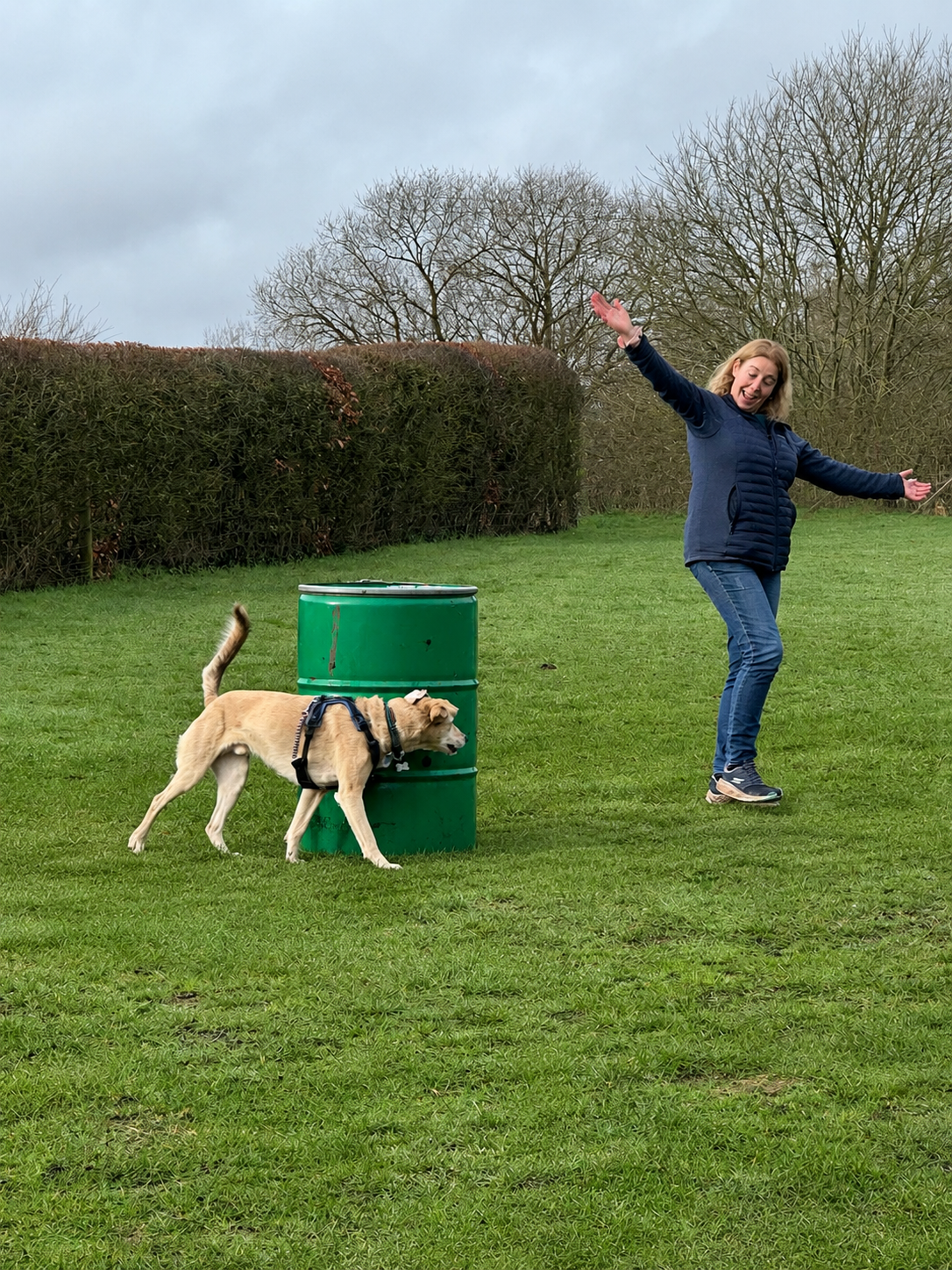
If the first few days and weeks after adoption are about helping your dog feel safe, the first five months are when you really start building a life together.
This is the bit where you start securing those bonds, building on your training and, hopefully, finding the joy.
You may also feel as though you're finally meeting your dog for the first time.
In those early days, many adopted dogs are quieter, more reserved or simply taking everything in. As the weeks and months pass and they begin to feel safer, more of their personality starts to emerge.
You discover what they love.
What worries them.
What makes them ridiculously excited.
Their funny little habits.
The things they find difficult.
And all the wonderful quirks that make them them.
And, importantly, they're learning all of those things about you too.
There isn't a magic five-month deadline
That’s right, before we go any further, five months isn't a deadline.
Some dogs settle incredibly quickly. Others need considerably longer, particularly if they've experienced multiple homes, kennels, trauma, limited socialisation or a big change in environment.
Don't worry if your dog doesn't seem to be at the same stage as somebody else's dog.
Work with the dog in front of you.
The goal isn't to race towards a perfectly trained dog. It's to build confidence, communication and trust at a pace your dog can cope with.
You're starting to understand each other
By now, you're probably developing a much better understanding of what everyday life together looks like.
Your dog is learning the rules and boundaries of their new home, but you're also learning about their boundaries.
You're starting to recognise their body language.
You might notice the subtle signs that tell you they're getting tired, worried or overwhelmed. You'll probably know which things send their excitement levels through the roof and which activities help them settle.
This knowledge is incredibly valuable.
Behaviour is communication.
The more you understand what your dog is communicating, the easier it becomes to support them rather than simply reacting to behaviour when something goes wrong.
What about socialisation?
This is also a lovely time to start expanding your dog's world.
But when I talk about socialisation, I don't mean introducing your dog to every dog, person, child, bicycle, café and busy high street you can find!
Good socialisation is about helping your dog experience the world without becoming overwhelmed by it.
Sometimes socialisation simply means watching.
Find a quiet place where your dog can observe the world from a comfortable distance.
Take a mat.
Sit down.
Reward calm behaviour.
Let them sniff.
Let them watch.
Then go home.
Your dog doesn't have to interact with something to learn about it.
In fact, learning that they can see another dog, person, cyclist or interesting thing and don't have to do anything about it is an incredibly useful life skill.
Stay under threshold
One of the biggest mistakes we can make when a dog appears to be settling is suddenly expecting too much.
They've managed a quiet walk around the block, so next weekend we take them to a huge, busy park on a sunny Saturday afternoon.
That's a massive jump.
Instead, build experiences gradually.
Choose quieter locations and quieter times of day. Give your dog space. Watch their body language and leave while they're still coping rather than waiting until they're overwhelmed.
Confidence comes from lots of manageable experiences, not from throwing a dog into situations and hoping they'll get used to them.
Build those foundation skills
This is the perfect time to keep working on all those skills you've started at home.
Practise:
Name response and focus
Loose-lead walking
Recall
Settle on a mat
Leave it
Find it
Nose touch
Calmness around distractions
Checking in with you
Remember, dogs aren't particularly good at generalising.
Your dog might have a beautiful recall in the kitchen and seemingly have absolutely no idea what the word means when you say it in the park!
That doesn't mean they're being stubborn.
It means you need to help them practise the same skill in lots of different environments, gradually increasing the difficulty.
Start easy and add distractions slowly.
That terrifying first time off lead…
I think most owners remember that slightly terrifying moment when they first unclip the lead!
There is absolutely no rush.
Secure dog fields are brilliant for practising recall and giving your dog some freedom while you build confidence in each other.
A long line can also be a fantastic halfway point between being on a normal lead and having complete freedom.
Always attach a long line to a well-fitting harness rather than your dog's collar. If your dog suddenly reaches the end of the line at speed, attaching it to a collar risks putting considerable force through their neck.
And don't wait until you desperately need your recall before practising it.
Make coming back to you fun.
Reward it.
Play games.
Call them, reward them and let them go off exploring again.
We want our dogs to learn that coming back to us doesn't always mean that the fun ends.
Start finding things you enjoy together
This is also the stage where you can begin exploring activities together.
You might try:
General obedience or life-skills classes
Scentwork
Trick training
Secure-field adventures
Confidence-building games
Enrichment activities
Training walks
A Rucksack Walk is a short, low-pressure activity that works to slow things down and strengthen the bond between you and your dog. It was designed by Steve Mann from the Institute of Modern Dog Trainers. You take a rucksack containing a few interesting items, find a quiet place, and spend around 15 minutes calmly exploring, sniffing and interacting together. The emphasis is on connection, curiosity and simply being together, rather than covering distance or completing a training session.
Personally, I'm a huge fan of scentwork. It gives dogs an opportunity to use one of their most incredible natural abilities, can be wonderfully tiring and calming, and is a fantastic way of building teamwork between dog and handler.
But the important thing is finding what your dog enjoys.
Not every dog wants to spend Saturday morning surrounded by other dogs at a training class. Some dogs would much rather explore a quiet woodland, search for scent or potter around a secure field with you.
That's okay.
Don't forget the quiet days
As your dog's confidence grows, it can be tempting to keep adding more.
More walks.
More training.
More adventures.
More places.
More experiences.
But dogs need downtime too.
Rest and sleep remain incredibly important, particularly after exciting or challenging experiences.
If you've had a busy day, consider having a quieter day afterwards. Give them opportunities to sniff, chew, sleep and decompress.
Remember trigger stacking too. Lots of individually manageable experiences can add up, leaving a dog far less able to cope by the end of the day.
Sometimes doing less is exactly what your dog needs.
Five months in…
Hopefully, somewhere around this stage, you'll look at your dog and realise just how far you've both come.
Maybe their recall isn't perfect.
Maybe you're still working on loose-lead walking.
Perhaps they still bark at something you'd really rather they didn't.
That's okay.
Training isn't finished at five months.
In many ways, you're only just getting started.
But you're no longer two strangers trying to work each other out.
You're becoming a team.
You've built routines. You've developed ways of communicating. You're beginning to understand what your dog needs from you and they're beginning to understand what you expect from them.
Most importantly, you're starting to build a life that works for both of you.
So don't rush.
Keep training.
Keep observing.
Keep listening to what your dog is telling you.
Keep exploring together.
And somewhere amongst all the recalls, long lines, muddy walks, chewed treats and training sessions…
don't forget to find the joy.
That's the really good bit.