Why Scentwork Might Just Be Your Dog’s New Favourite Hobby
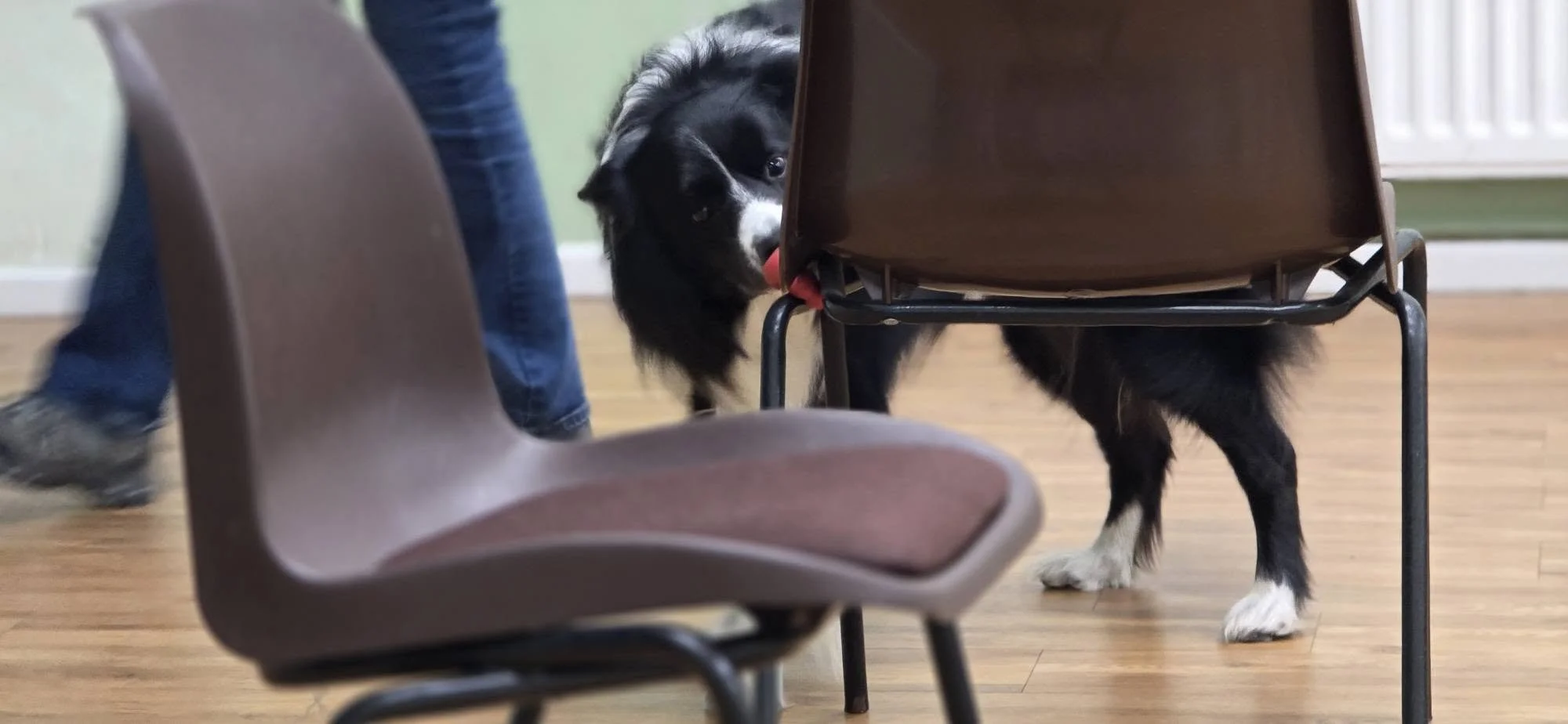
If you have ever watched your dog stop halfway through a walk, nose glued to one particular blade of grass while you stand patiently (or perhaps not so patiently!) at the end of the lead, you already know something important:
Dogs experience the world through their noses.
Sniffing isn't just something dogs do. It is a huge part of how they gather information, explore their environment and make sense of the world around them.
And scentwork takes something dogs already naturally love doing and turns it into a fantastic activity that you can enjoy together.
That's one of the reasons I love it so much.
So, what actually is scentwork?
When people hear the words scent detection, they often picture highly trained police dogs searching for drugs or explosives.
And yes, scentwork is based on exactly the same principles.
But you absolutely don't need to be an experienced dog trainer – or have a working dog – to enjoy it.
Scentwork teaches our dogs to search for a particular scent and communicate to us when they have found it and its simple to teach whether you are a pet dog owner or a more experienced handler.
We start simply, teaching the dog that finding a particular odour is rewarding, before gradually developing their searching skills.
As they progress, searches can become increasingly interesting and challenging.
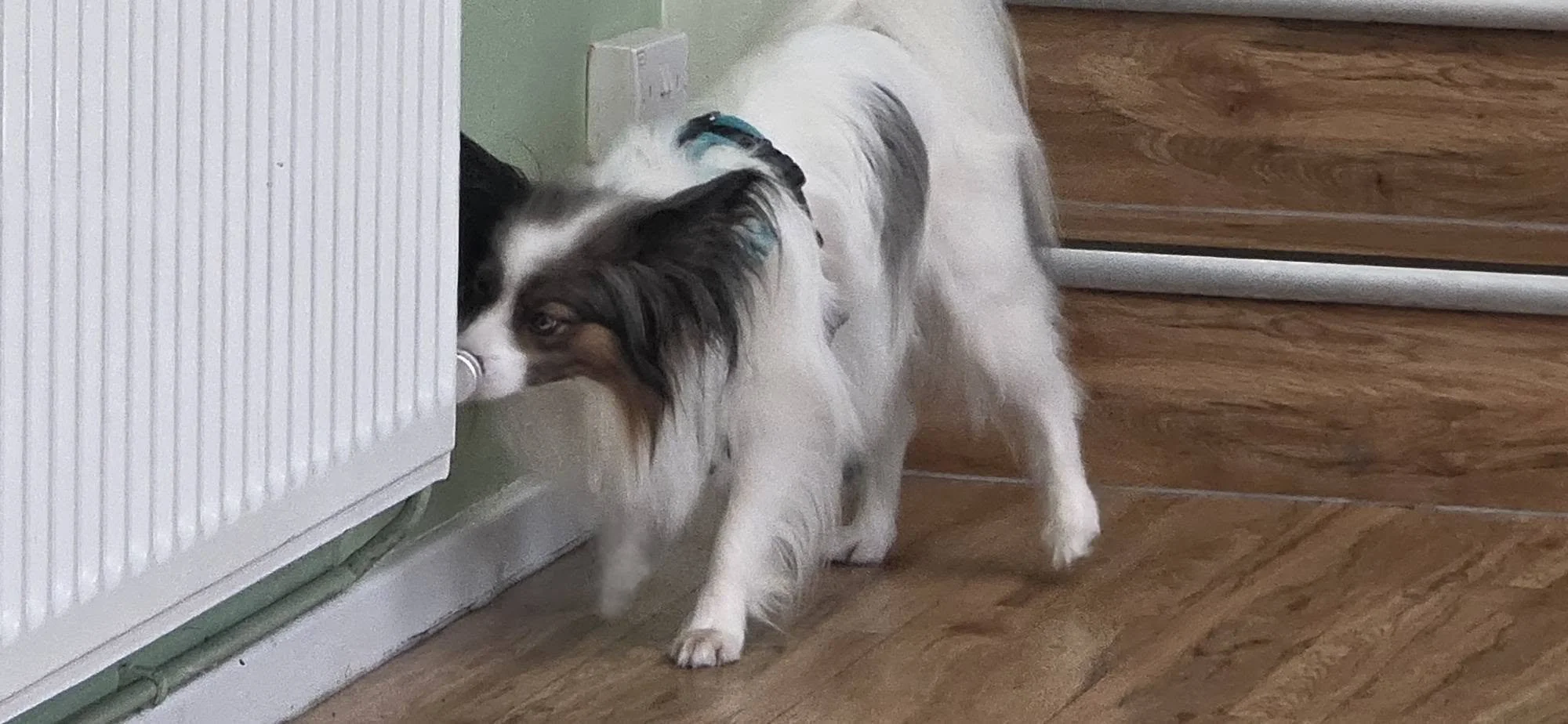
We can search rooms, outdoor areas, vehicles, bags, containers and all sorts of different environments.
The possibilities are almost endless.
Dogs are quite extraordinary at this
A dog's nose is an incredible piece of biological equipment.
Humans tend to navigate the world visually. Dogs gather an enormous amount of information through scent.
When your dog sniffs, they aren't simply thinking, "That smells interesting."
They can potentially gather information about who or what has been there, where something has travelled and how the scent is moving through the environment.
As dogs become more experienced at scentwork, handlers also start learning about things such as airflow, scent movement, pooling scent and environmental conditions.
That's when it becomes particularly fascinating.
You stop simply watching your dog search and start learning to read what their nose is telling them.
It's fantastic enrichment
One of the biggest benefits of scentwork is mental enrichment.
We sometimes think that tiring our dogs means giving them more physical exercise.
Another walk. Another run. Another game of ball.
But mental exercise matters too.
Searching requires concentration, problem solving and decision making.
A relatively short scentwork session can leave a dog wonderfully satisfied without needing miles of physical exercise.
That makes it particularly useful on days when long walks aren't practical – whether because of the weather, an injury, age, or simply because your dog would benefit from a different type of activity.
It can help dogs slow down
Scentwork can also be wonderfully calming.
Instead of asking a dog to constantly respond to us – sit, stay, heel, watch me – we give them a job and allow them to use one of their greatest natural abilities.
We let the dog be the expert.
For busy, excitable dogs, that opportunity to put their nose down and concentrate can be incredibly valuable.
It's one of the things I particularly love about scentwork. You're not trying to suppress your dog's natural behaviour.
You're giving it somewhere appropriate to go.
Confidence can grow at the other end of the lead
Scentwork can also be a brilliant confidence-building activity.
We can start in environments where a dog feels completely comfortable and gradually introduce different locations, surfaces and search areas.
The dog learns:
I can work this out.
For dogs who find parts of the world a little overwhelming, having a familiar job can be incredibly helpful.
Importantly, scentwork can be adapted to the individual dog. There is no need to throw a nervous dog into a busy environment and hope they cope.
We work at the dog's pace.
And then something lovely happens to the human-dog relationship
At the beginning, most handlers want to help.
"It's over there!"
"Have you checked this bit?"
"Go on… sniff here!"
And then we have to learn one of the hardest dog-training skills of all:
Trust your dog.
Because their nose is considerably better at this than ours.
Good scentwork is a partnership.
Your dog learns how to search and communicate with you, while you learn how to read their behaviour.
You start noticing tiny changes.
A change in breathing. A head turn. A sudden change of direction. A pause. A difference in body movement.
Over time, you become much better at reading your own dog.
And that teamwork is one of the very best parts of scentwork.
"But my dog isn't a working breed…"
Doesn't matter.
"My dog is older."
That's fine.
"My dog is a complete beginner."
Perfect.
"My dog is a bit bonkers."
Welcome aboard!
Scentwork really can be adapted for almost any dog.
Young dogs, older dogs, rescue dogs, small dogs, large dogs, energetic dogs and dogs who perhaps aren't suited to more physically demanding dog sports can all take part.
You don't need a super-obedient dog either.
In fact, sometimes the dog who isn't particularly interested in traditional obedience training suddenly discovers scentwork and thinks:
Finally! Something I'm brilliant at!
From pet dog hobby to proper detective work
Another thing I love about scentwork is that you can take it as far as you want.
You might simply want an enjoyable activity to do with your dog.
Fantastic.
Or you might catch the scentwork bug.
Then we can start developing more advanced skills: building a reliable indication, working increasingly complex hides, searching larger areas, tackling vehicle searches and learning how environmental conditions affect scent.
Handlers also begin to develop their own skills.
Where is the air moving?
Where might scent collect?
Is my dog following odour to source or investigating something else?
Am I accidentally influencing my dog?
That last one is particularly interesting.
As handlers become more experienced, one of the challenges is learning to give the dog enough information to understand the task without inadvertently telling them where we think the hide is.
Scentwork becomes as much about developing the handler as developing the dog.
And then, if you fancy testing your skills, there are trials too.
More than training – we're building a community
This is also where Scent Academy comes in.
Julie and I wanted to create something that went beyond attending one course and then wondering what to do next.
We're building a community where people can enjoy scentwork with their dogs, learn new skills and continue progressing at whatever level suits them.
We run regular beginners' classes, workshops, follow-on sessions and trials, so there are opportunities to keep learning and challenging both yourself and your dog.
Some people want to compete.
Some want to develop increasingly advanced searches.
Some simply want to spend an enjoyable couple of hours doing something brilliant with their dog.
All are equally welcome.
Because ultimately, Scent Academy isn't about having the "best" dog.
It's about getting to know your dog.
Watching them learn.
Learning to trust them.
Celebrating when they crack a difficult search.
Occasionally wondering how on earth they found something that you couldn't even begin to detect.
And enjoying being part of a group of people who are just as delighted by dogs sniffing things as you are.
Oh, and there's cake
This is important.
There is training.
There is learning.
There is teamwork.
There are trials.
There is lots of sniffing.
And there is cake.
We take our scentwork seriously.
We see absolutely no reason why we should have to take ourselves seriously at the same time.
Give your dog a chance to use their superpower
We spend a lot of our lives teaching dogs how to fit into our human world.
Don't pull.
Don't bark.
Don't chase that.
Walk nicely.
Come back.
Wait.
Scentwork gives us the opportunity to turn that relationship around.
For once, we can step back and say:
"You know how to do this better than I do. Show me."
And watching a dog realise that you're finally asking them to use one of the things they were born to do is rather wonderful.
So whether you're looking for enrichment, a calmer activity, something to build your dog's confidence, a new hobby to enjoy together or the beginnings of your scentwork competition career, come and have a go.
Your dog already has all the equipment they need.
They just need their nose.
And you.
(And possibly cake.)
Karen
Don’t miss our next Scent Academy Beginners Scentwork Class! A four week course starting Thursday 3rd September at 6pm.