Rescue Dogs Series - The First 6 Weeks After Adoption: Building Trust, Communication and Confidence
Part 3 of my Rescue Dog Series.
In my previous blog, we talked about those all-important first seven days after bringing your new dog home. During that first week, the goal is simple: help your dog feel safe.
As you move into the first six weeks, things often start to change.
This is when you really begin to see your dog's personality emerge.
When many dogs first arrive, they can seem a little shut down, quiet, reserved or simply on their best behaviour. In many ways, they're a bit like us if we were staying in someone else's home. We wouldn't immediately relax and behave exactly as we do in our own house!
As your dog starts to settle and trust you, you'll begin to see more of who they really are – the good, the bad and occasionally the ugly!
And that's completely normal.
They're still taking everything in, working out what is expected of them, learning the rules of their new home and deciding whether the world around them is safe.
Remember...
Behaviour is communication.
If your dog starts barking, pulling on the lead or struggling to settle, they're not trying to be difficult. They're telling you something about how they're feeling.
Get to Know the Dog in Front of You
One of the most important things you can do during these first few weeks is spend time learning about the dog you've actually adopted.
Think about their breed or breed mix.
A Border Collie is likely to have very different needs to a Greyhound.
Understanding what your dog was originally bred to do can really help you provide the right outlets for their natural behaviours and set realistic expectations.
Build Your Relationship Through Training
These first six weeks are all about strengthening your bond and developing clear communication.
Keep training fun, rewarding and pressure-free.
Focus on building useful life skills such as:
· Name response
· Recall
· Loose lead walking
· Settle
· Nose touch
· Find it games
· Leave it
· Calm focus around distractions
Remember that training doesn't have to be long.
A few minutes several times a day is often far more effective than one long session.
Start Training at Home
One of the biggest mistakes people make is expecting their dog to perform outside before they've really understood the exercise indoors.
Your home is the least distracting environment, making it the perfect place to teach new skills.
Once your dog is confidently performing an exercise indoors, move into the garden.
When that's going well, try the front garden.
Then perhaps the pavement outside your house.
Gradually build from there.
I often ask owners to imagine the world as lots of little grids.
Your dog learns in one grid at a time.
The house is one grid.
The back garden is another.
The front garden is another.
Your local street is another.
Dogs aren't brilliant at generalising. Just because they can do something perfectly in your living room doesn't mean they'll automatically understand it somewhere else.
For example, if your dog can hold a two-minute sit in your kitchen, don't expect the same in the garden.
Go back to a one-second sit and build up again.
That isn't failure.
It's simply your dog, learning our language, in different environments will all the added distractions this adds.
Keep It Short, Fun and Clear
Successful training should leave both you and your dog wanting another go.
Keep sessions:
· Short
· Fun
· Reward-based
· Finish on a win!
Be consistent with your cues and your rewards, and celebrate every bit of progress.
Spend Time Together
Training is only one part of building a relationship.
Spend time simply being together.
Go on relaxed walks.
Allow plenty of opportunities for sniffing and exploring.
Play together.
Learn what your dog enjoys.
The stronger your relationship becomes, the easier everything else tends to be.
Go at Your Dog's Pace
It's tempting to introduce your new dog to everyone.
Friends.
Family.
Cafés.
Busy parks.
Group walks.
But before you do, ask yourself one simple question:
Is my dog ready?
Start small and gradually build their confidence.
If your long-term goal is a dog who settles happily in a café, begin by teaching a brilliant settle on a mat at home.
Help them become calm and confident before expecting them to cope with busy environments.
Slow really is fast.
Keep Life Predictable
I've mentioned routine in my previous blogs because it's so important.
Dogs thrive on predictability.
Try to keep feeding times, walks, rest periods and bedtime as consistent as possible.
Routine helps your dog feel secure and reduces unnecessary stress during these important early weeks.
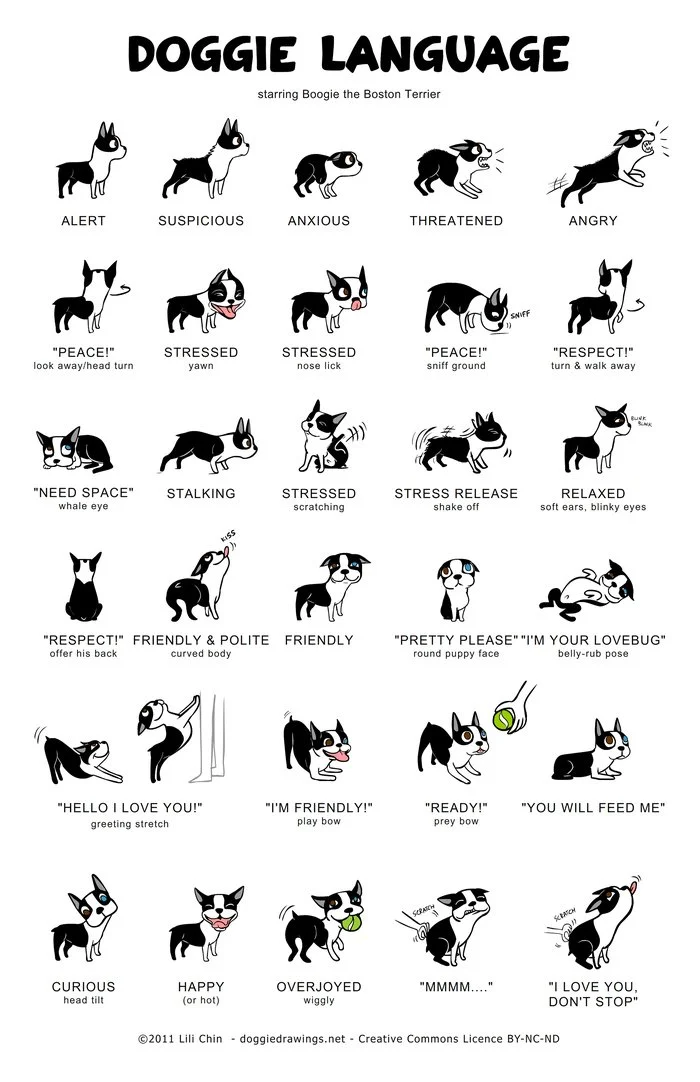
Learn to ‘listen’ to Your Dog
Your dog is communicating with you all the time.
The more you understand their body language, the easier it is to recognise when they're comfortable, worried or overwhelmed.
Watch for signs such as:
· Lip licking
· Yawning when they aren't tired
· Turning their head away
· Changes in ear position
· Tail carriage
· Becoming still or hesitant
One of my favourite resources is Doggie Language by Lily Chin. It's a lovely book on canine body language and one I'd recommend to every dog owner.
The earlier you notice these subtle signs, the easier it is to support your dog before they feel the need to bark, lunge or shut down.
Don't Wait to Ask for Help
If you're struggling, don't wait.
Whether it's pulling on the lead, barking at other dogs, settling in the house or simply knowing where to start with training, getting support early can make a huge difference.
It's much easier to guide a new behaviour than it is to change one that has been practised for months.
Asking for help isn't a sign of failure.
It's one of the best things you can do for your dog.
Celebrate the Small Wins
Progress doesn't always look dramatic.
Sometimes it's your dog choosing to lie down and relax.
Walking past another dog without reacting.
Checking in with you on a walk.
Sleeping peacefully through the night.
Choosing to come and sit beside you.
These are the moments that tell you your relationship is growing.
Final Thoughts
The first six weeks are all about building trust, communication and confidence.
Take your time.
Keep things positive.
Celebrate every little success.
Remember, you're not trying to create the perfect dog overnight.
You're building a partnership that will last for years to come.
In the final blog of this series, we'll look at what life often looks like around the five-month mark, when many rescue dogs have truly settled into family life and you can start broadening their experiences even further.
If you've recently adopted a dog and would like some extra support, I specialise in helping rescue and overseas dogs settle into family life. My Good Dog Foundations online course and 1-1 training sessions are designed to help you build confidence, strengthen your bond, and navigate any challenges using kind, reward-based methods.